
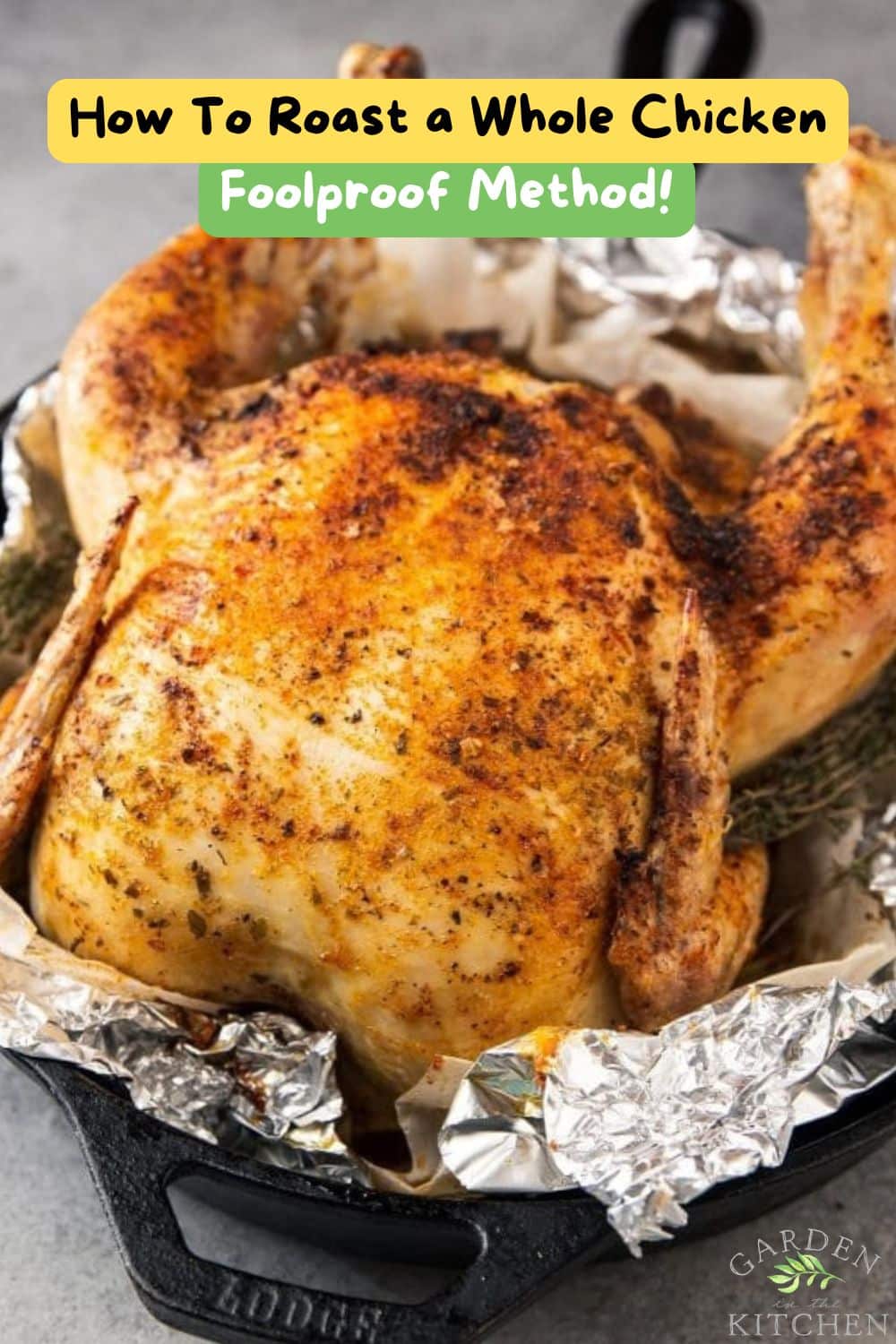
Learning how to roast a whole chicken is one of those basic cooking skills that sounds more intimidating than it actually is. I’ve been making whole roasted chickens for years, and this simple method has become my go-to for getting golden, crispy skin with juicy, tender meat inside.
The seasonings can change, but the cooking technique stays the same: start with a 450°F oven, then immediately reduce the temperature to 400°F and let the oven do the rest.
Once you learn this method, you can use it as the starting point for just about any whole roasted chicken recipe.
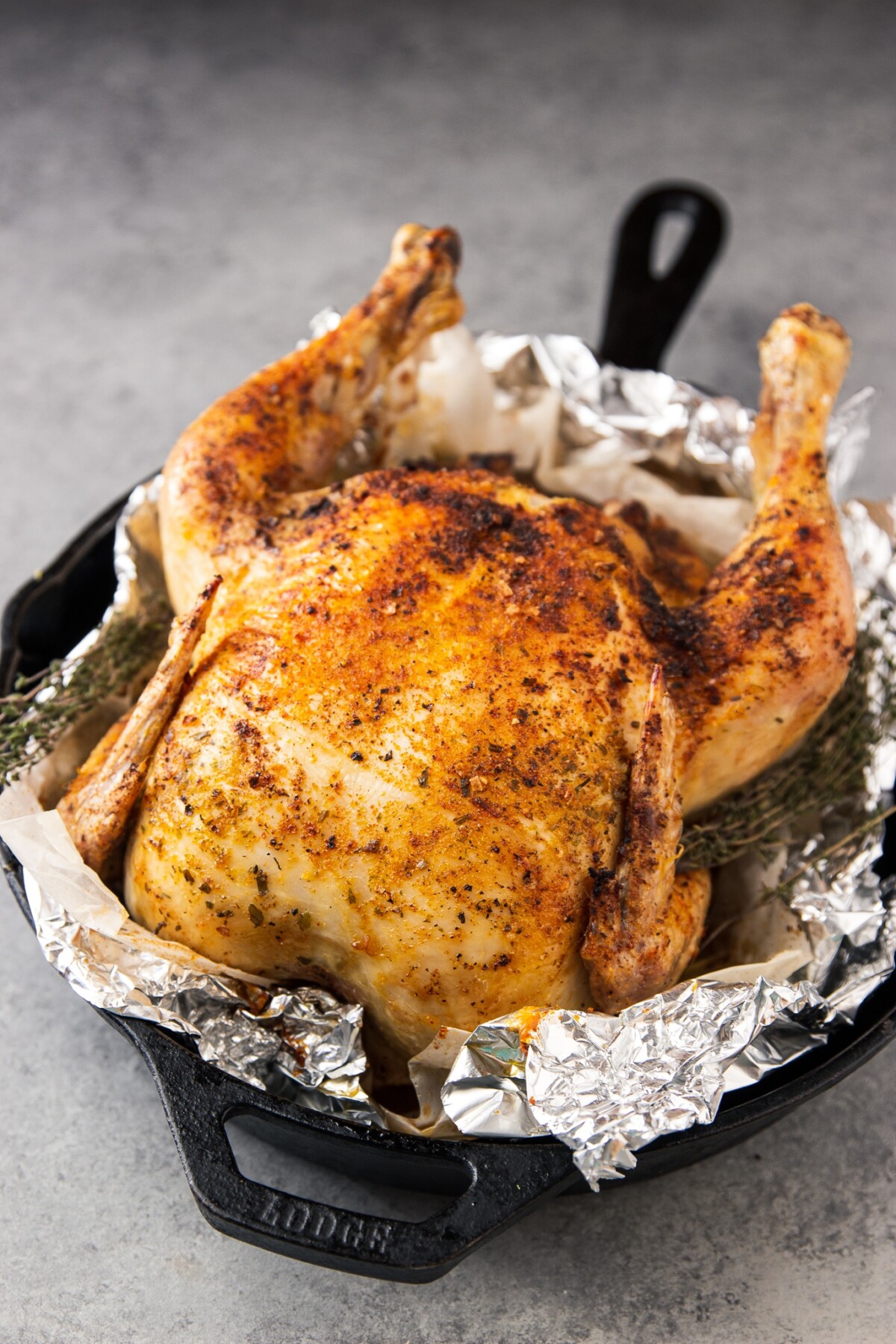
My 450°F → 400°F Roast Chicken Method
This is the technique I’ve been using for years, and it’s now the foundation for all of my whole roasted chicken recipes.
I preheat the oven to 450°F, place the prepared chicken into the hot oven, and then immediately reduce the temperature to 400°F.
Why start hotter?
That initial exposure to higher heat gives the outside of the chicken a head start on browning and crisping the skin. Reducing the oven to 400°F immediately afterward gives the chicken a more moderate temperature to finish roasting through.
It’s a small adjustment, but after making many whole chickens over the years, it’s the method I continue to come back to.
Don’t Let the Clock Decide When Your Chicken Is Done
Cooking time will vary depending on the size of your chicken and your individual oven, so I consider roasting times a guideline rather than the final word.
Use an instant-read meat thermometer and check the thickest part of the chicken without touching the bone. The chicken is ready when it reaches an internal temperature of 165°F.
This is especially important with whole chickens because one bird may cook faster than another even when they’re similar in weight.
My best advice: start checking the temperature before you think the chicken will be done. You can always give it another 5 or 10 minutes, but you can’t undo an overcooked chicken.
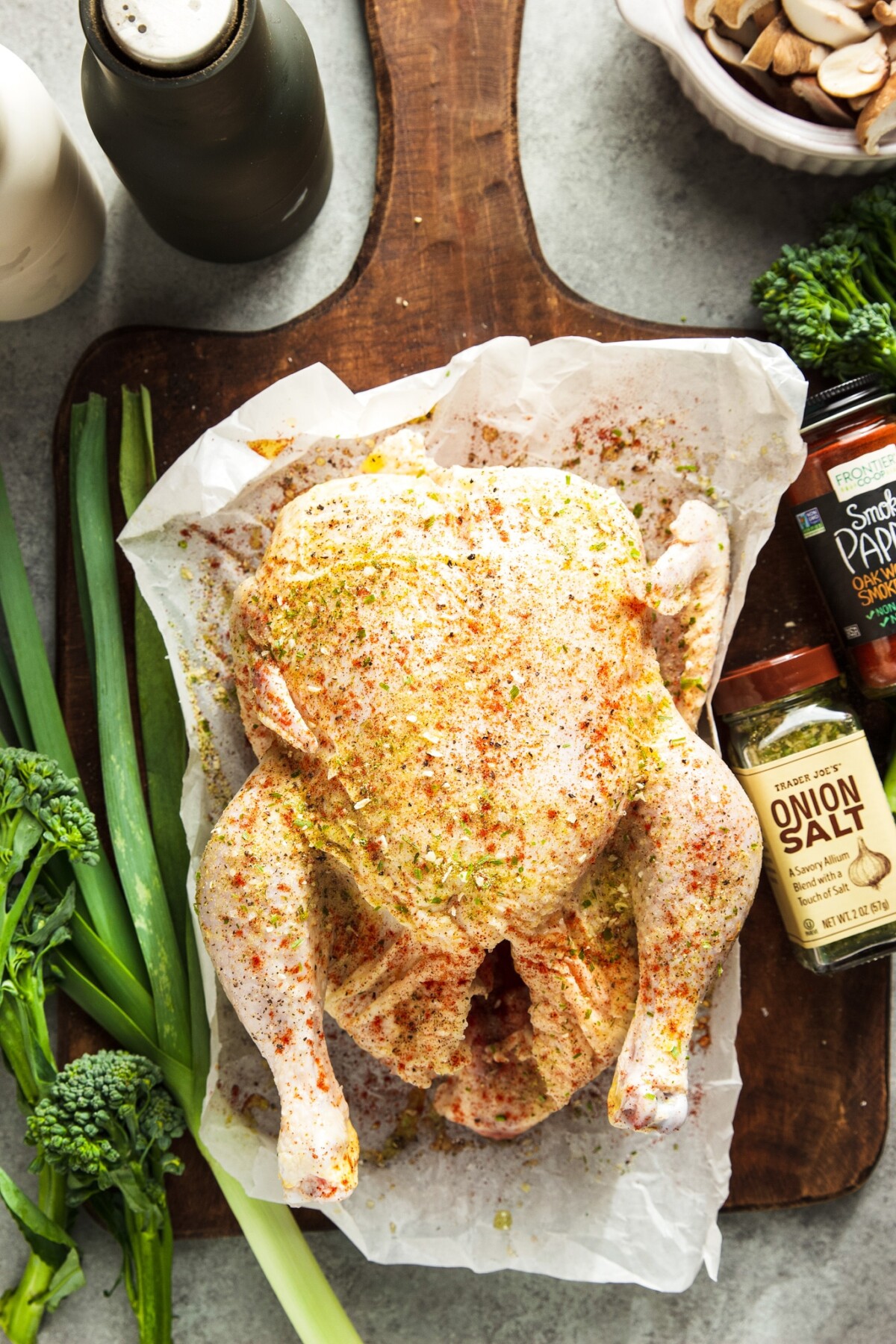
BEFORE THE CHICKEN GOES IN THE OVEN
There are just a few things I do before roasting that make a difference.
➜ Dry the chicken really well. Moisture on the surface works against browning, so pat the skin thoroughly dry before adding the oil and seasonings.
➜ Season the entire bird. Don’t stop at the breast. Get the olive oil and seasonings over the legs, thighs, wings and back as well.
➜ Roast uncovered. Leaving the chicken uncovered allows the skin to brown and crisp as it cooks.
➜ Let it rest. Once the chicken reaches 165°F, remove it from the oven and let it rest for about 10 minutes before carving.
Try My Other Whole Roasted Chicken Recipes
Once you have this basic roasting technique down, you can change the flavors depending on what you’re craving.
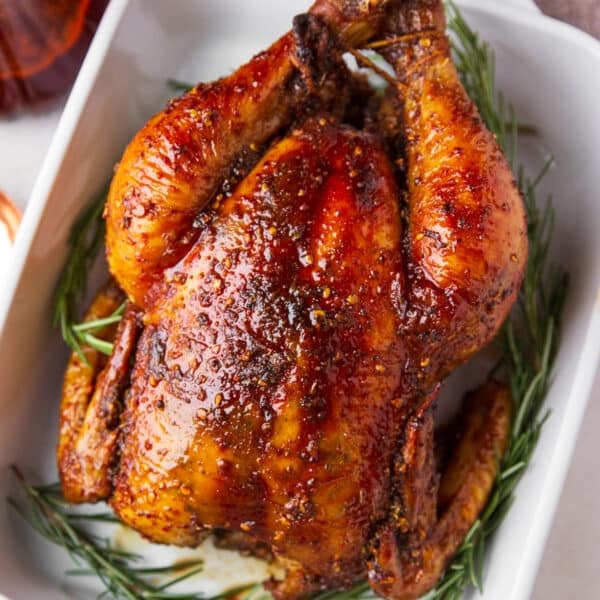
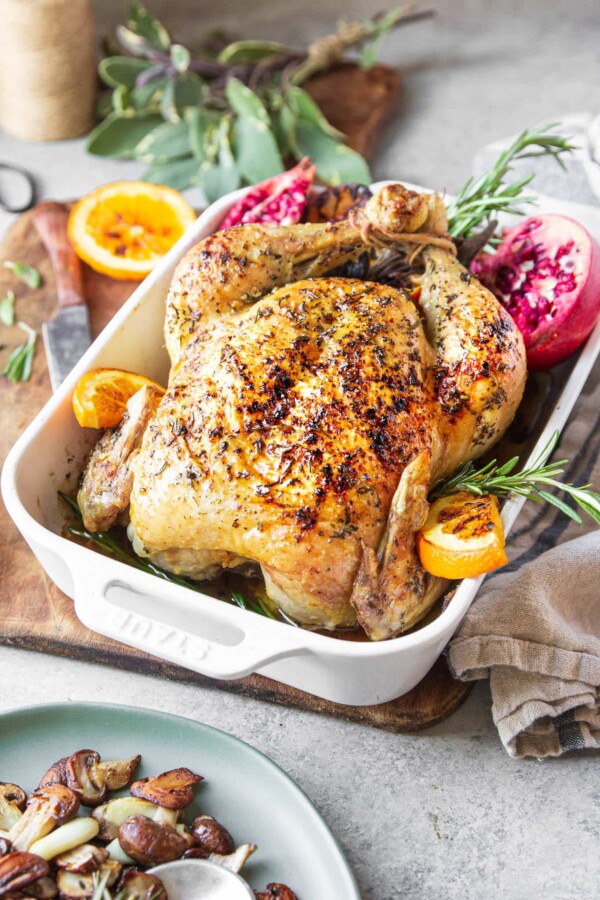
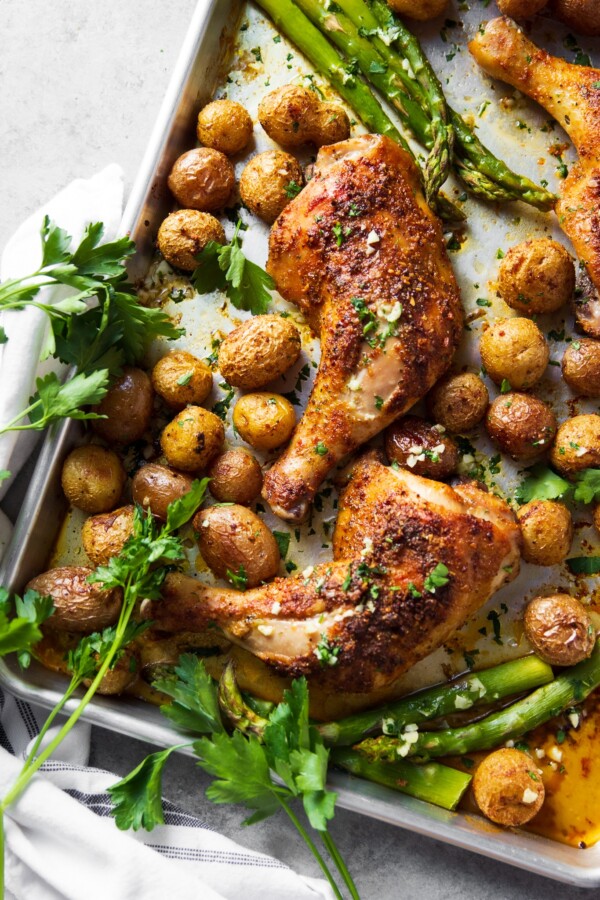
My Herb Roasted Chicken uses the same 450°F → 400°F technique, but adds butter and fresh rosemary, thyme and oregano for a classic, comforting roast chicken.
For something completely different, try my Hot Honey Roasted Chicken with Chili Crunch. It starts with the same roasting method, then gets brushed with hot honey and chili crunch toward the end for a sticky, spicy and savory finish.
Both recipes came from this same basic lesson: once you have a whole chicken roasting method you can rely on, the flavors can change while the technique stays the same.
How to Roast a Whole Chicken
Ingredients
- 1 whole chicken, about 4 lbs
- 2 tbsp olive oil
- 1/2 tbsp garlic powder
- 1/2 tbsp onion powder
- 1 tsp smoked paprika
- salt and pepper, to taste
Instructions
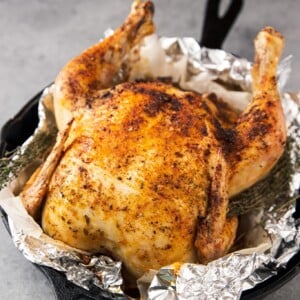
- Preheat oven to 450°F. Pat the chicken thoroughly dry with paper towels and place it in a roasting pan or on a baking sheet.
- Coat the entire chicken with olive oil. Season evenly with garlic powder, onion powder, smoked paprika, salt and black pepper, making sure to season the breast, back, legs and wings.
- Place the chicken in the 450°F oven and immediately reduce the oven temperature to 400°F.
- Roast until golden brown and the internal temperature reaches 165°F in the thickest part of the chicken without touching bone. Begin checking the temperature early rather than relying exclusively on cooking time.
- Remove from the oven and allow the chicken to rest for about 10 minutes before carving.
Nutrition
Nutrition information is automatically calculated, so should only be used as an approximation.










Lovely! I really like your seasonal variations – it’s the way I cook too! And, I looked first to see if you listed butter. I don’t think a roast chicken is as good without butter!!!
I used to make my chicken using olive oil but there is a huge difference there! I am so happy that you enjoyed the seasonal suggestion, it’s what I do and fits well with our body cravings. Thanks for stopping by Mimi 🙂
Going to make it this weekend 🙂
Awesome, hope you’ll love it!
It’s a gorgeous recipe. Yes butter makes this amazing difference. I have never tried my roast with fruits, but I love the idea and definitely will give it a try. As an alternative to butter for a low fat version, I sometimes put a thin layer of yogurt instead of butter. And it works good too.
Yogurt ha? I like that! Thanks so much for stopping by Alina, I really hope you enjoy this recipe! 🙂